‘Government cannot expect more from agriculture while providing less’, NFU Scotland conference hears
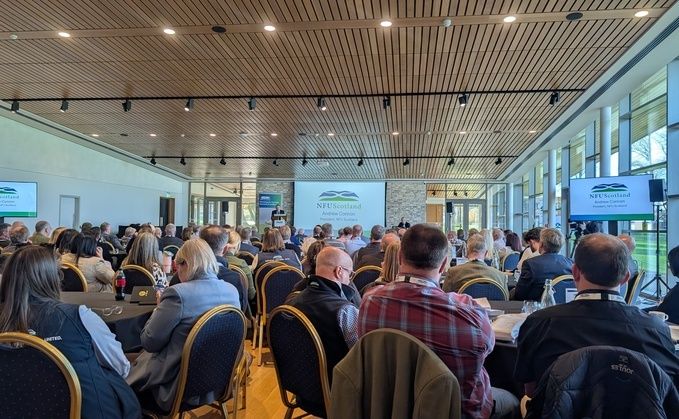
Addressing delegates on 29 October, NFU Scotland president Andrew Connon said resilience must mean having a business capable of withstanding a difficult year, adapting to changing circumstances and investing for the future, rather than simply expecting farmers and crofters to absorb further financial pressures. Analysis by NFU Scotland shows agricultural support has lost approximately 27% of its purchasing power since 2014, while farming businesses continue to face rising input costs.
Mr Connon said the Government was asking agriculture to deliver on an increasingly broad range of priorities, including food security, economic growth, climate action, biodiversity and thriving rural communities, without providing sufficient financial backing. “Government cannot reasonably expect more from agriculture while providing less in real terms,” he said. The Union is calling for annual agricultural support to increase from approximately £677m to £860m, with funding protected against inflation through to 2030 and beyond.
Profitability and resilience go hand in hand
Resilience was a central theme throughout the conference, with Gillian Martin, Cabinet Secretary for Climate Action and Rural Affairs, telling delegates that building stronger businesses would be essential to achieving Scotland's agricultural ambitions. “Farm businesses must be more resilient in the face of unprecedented, and I would say unpredictable, challenges that hit the sector,” she said. “Without building more resilience into Scottish agriculture, we cannot hope to drive farm profitability. The two, profitability and resilience, are absolutely linked.”
However, the discussion also highlighted frustration among farmers who feel the responsibility to remain resilient is increasingly falling on their own shoulders. During a question-and-answer session, one Union member described resilience as “humiliating”, pointing to the personal sacrifices made by farming families to keep businesses operating and food prices low. He highlighted the pressures on parents balancing long working days, childcare and livestock responsibilities, questioning whether the current system was sustainable for the next generation.
Ms Martin acknowledged the request for increased support and said she would have her “elbows out” during negotiations to retain existing payment levels. She also pledged to make the case for additional funding if the opportunity arose, although she noted that the recent Budget offered little indication of additional money being made available.
Budget criticised as a missed opportunity
Mr Connon described the latest Budget as a missed opportunity to support the people producing Scotland's food, saying decisions made by the Scottish Government in December would be particularly important. He welcomed measures relating to red diesel and fertiliser tariffs but said farmers needed greater clarity on what these changes would mean financially for their businesses.
During the conference, Ms Martin also criticised the UK Government's approach to agriculture, describing its introduction of the family farm tax as evidence of a lack of understanding of the sector.
There were, however, some positive announcements for Scottish farmers. Ms Martin confirmed a further round of the Agri-Environment Climate Scheme (AECS) in 2027, alongside the continuation of the Scottish Suckler Beef Support Scheme (SSBSS) until 2029. Both measures will be important for businesses planning ahead, particularly those looking to invest in environmental improvements and maintain suckler beef production.
Protecting domestic food production
The conference also marked the launch of NFU Scotland's new paper, Imports: Protecting Standards, Supporting Domestic Production, which calls for an urgent, independent review of UK food import policy. The Union is seeking greater assurance that imported food meets the standards expected of domestic producers, while ensuring that UK farming businesses are not placed at a competitive disadvantage.
Mr Connon also renewed calls for emergency support for Scotland's pig sector, where independent producers have faced losses exceeding £1m a month since March. Concluding his address, he remained optimistic about the long-term prospects for Scottish agriculture, highlighting the ambition, capability and commitment of the next generation. “I have absolutely no doubt that Scottish agriculture has a bright future. The mission is there, the ability is there and the next generation is there,” he said. “Our job is to make sure they get the chance to succeed.”
Investing in the future of farming
The debate at the NFU Scotland Autumn Conference reflects the wider challenges facing agricultural businesses across the UK, as farmers balance rising production costs, changing support schemes, environmental commitments and the need to invest in new technology. For businesses looking to improve efficiency, strengthen resilience and plan for the future, access to the right machinery, technology and expertise will remain an important part of the picture.
LAMMA 2027, taking place at the NEC Birmingham on 20–21 January, will bring together manufacturers, suppliers and agricultural professionals to explore the latest machinery, equipment and innovations supporting modern farming. Co-located with CropTec and the Low Carbon Agriculture Show, the event will provide an opportunity to discover practical solutions, hear from industry experts and explore the developments shaping the future of agriculture.