Exhibitor Spotlight: Agricultural plastics play an essential role in modern farming
Tell us about your business.
Agriculture Plastics Environment UK (APE UK) is the industry body working to improve the collection and recycling of agricultural plastics across the UK. Plastics such as silage wrap, fertiliser and feed bags, bale netting and twine play an essential role in modern farming, but managing them effectively at end of life remains a significant challenge.
We bring together farmers, manufacturers, distributors, collectors, recyclers, farming organisations and government to help develop a more coordinated, practical and farmer-focused approach.
Our role is not to collect or recycle plastics ourselves, but to help the industry build the infrastructure, recycling capacity and markets needed to make recycling easier and more sustainable.
What’s new or exciting that you’ll be showcasing at LAMMA this year?
We will be sharing some of the practical work now taking place to improve agricultural plastics recycling.
That includes learning from both the Harper Adams - APE agri-plastics workshop held in 2026 and APE’s large-scale Four Rivers for LIFE project in South Wales. We will also be exploring how farmers can work together locally — including through farm clusters — to coordinate collections, consolidate plastics and potentially reduce costs.
We will share our work with industry and government on improving UK recycling capacity and creating a more consistent national approach.
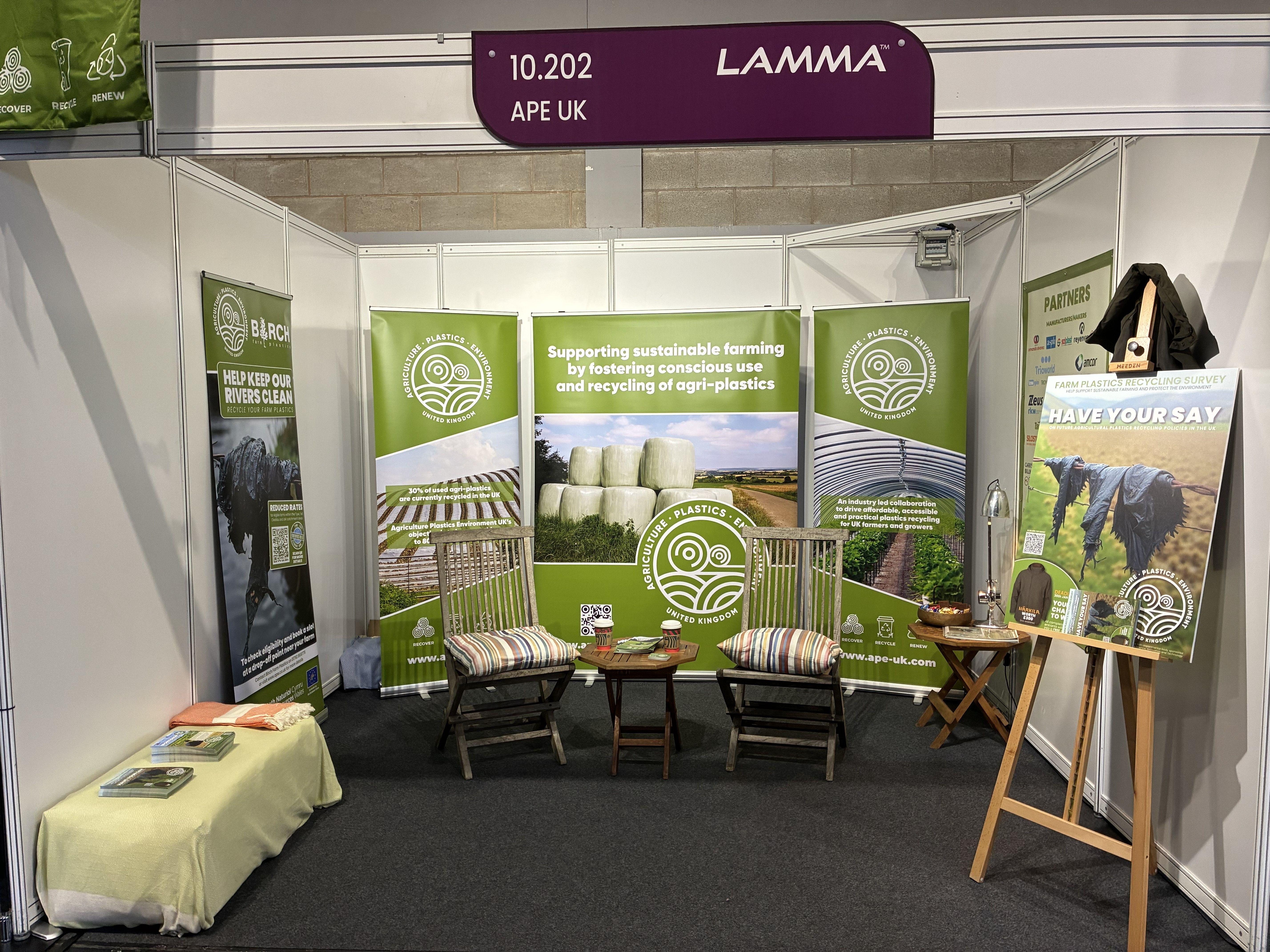
What can visitors expect when they visit your stand?
A conversation rather than a sales pitch.
We want to hear from farmers about what is working, what isn’t, and what would make agricultural plastics recycling easier in practice.
We can also share practical learning on how plastics can be stored, handled and prepared after use to make them easier — and potentially cheaper — to collect and recycle.
Whether the challenge is collection, cost, storage, sorting or access to local services, we want to understand it.
MOST EXCITING: As a farmer, an opportunity to reduce the cost of their agri-plastics recycling.
Can you share a customer success story or example of how your products or services have made an impact?
Our Four Rivers for LIFE project in South Wales is showing what can be achieved when farmers are given clear, consistent information, practical collection options and support with costs.
The project combines strong farmer communications, on-farm collection and local bring-centres, backed by a government-funded incentive to help reduce recycling costs.
Together, these measures are increasing participation and moving significantly more agricultural plastic into legitimate recycling routes, while providing valuable evidence for how the approach could be scaled elsewhere in the UK.
Why is attending LAMMA important for the industry?
LAMMA brings almost every part of UK agriculture together in one place.
That is particularly important for agricultural plastics recycling, because the challenge cannot be solved by farmers, collectors, recyclers, manufacturers or government working independently.
For APE, it is an invaluable opportunity to listen, build partnerships and raise awareness of the work needed across the whole supply chain.
What’s the one thing visitors shouldn’t miss on your stand?
As a farmer, an opportunity to reduce the cost of their agri-plastics recycling.
How?
Come and tell us:
"What would make agricultural plastics recycling work better on your farm"?
We are particularly interested in hearing from farmers and farm clusters who see opportunities to work together locally on collections and recycling.
Those conversations will help shape what APE does next.